Trust and Security
The digital economy can reach its full potential when individuals and businesses have confidence in their ability to interact and transact securely online. The major challenges include generative AI introducing new vectors for misinformation and automated cyber-attacks, quantum computing undermining cryptographic techniques, and exploitative business models
Evolution from 2025
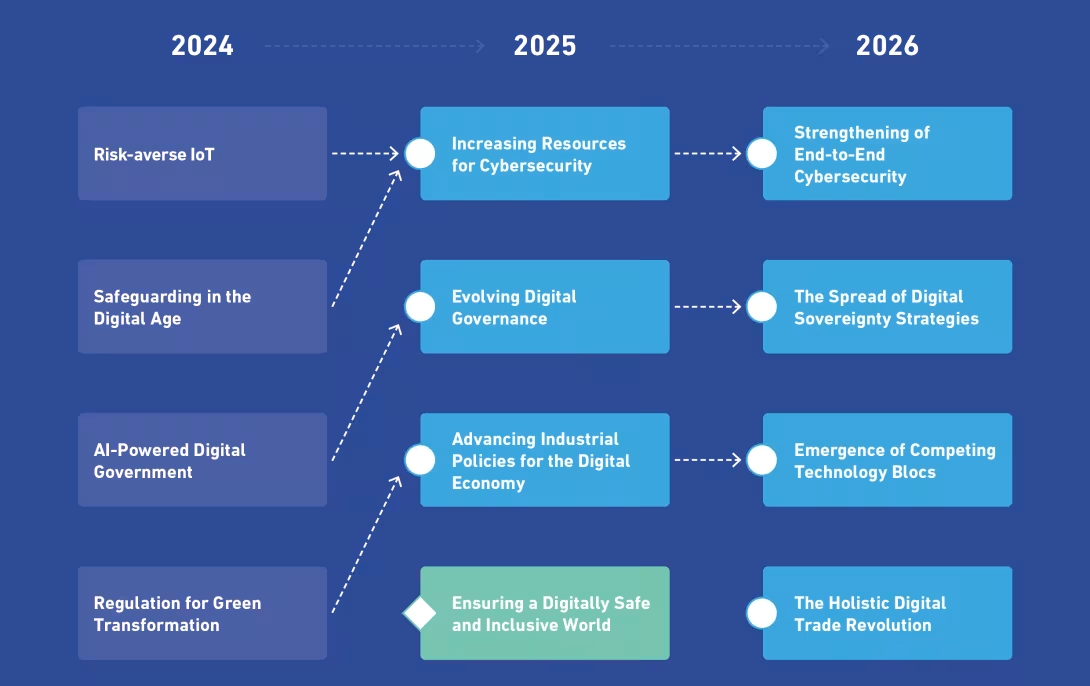
The narrative around Trust and Security has evolved significantly over the past two DET reports. Where previously the focus was on tackling isolated technological risks, such as securing IoT devices in the DET 2024, the conversation has now matured to become more systemic and geopolitical. Technology is no longer just a tool; it is a central pillar of competitiveness, economic supremacy, and national security. Distinct visions for a global digital order are emerging, with the emergence of competing technology blocs.
The six trends within this theme reflect a shift toward managing complex, dynamic, long-term challenges in a deeply interconnected global digital economy. Since the DET 2025 was published, the focus has broadened from operational security to strategic resilience, underscored by the rise of national industrial policies, digital sovereignty strategies, and the deepening interplay between technological competition and geopolitics. Defending entire interconnected digital ecosystems demands more holistic digital trade rules and increased resources for strengthening end-to-end cybersecurity — all central to strengthening trust and security in the digital era.
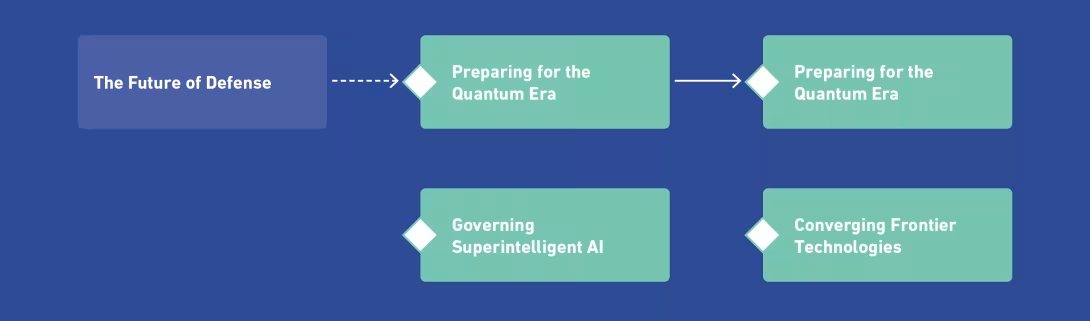
The discourse is also becoming more forward-looking, with an urgent focus on preparing for the convergence of multiple frontier digital technologies. These include the paradigm shift of quantum computing’s threat to undermine existing cryptographic techniques, the rapid advancement of generative AI, and the rise of business models with incentive structures that may not align with user safety and digital trust. Their convergence underscores the urgent need to reassess how trust is maintained in the digital economy.
Trust and Security: Evolution of Digital Economy Trends Across DET 2024–2026

How to build Trust and Security?
To capitalize on the opportunities presented by the digital economy trends in this theme, stakeholders should collaborate by:
Harmonizing global standards and regulatory frameworks
to balance sovereignty with innovation and interoperability.
Building shared, secure, and sustainable infrastructure
for ecosystem-wide digital resilience
Investing in targeted skills programs and technology transfer
to close the global talent gap.
Explore the trends in this theme
STRENGTHENING OF END-TO-END CYBERSECURITY
STRENGTHENING OF END-TO-END CYBERSECURITY
Current trend
More collective and adaptive approaches are needed to protect increasingly complex and interconnected digital ecosystems.
THE SPREAD OF DIGITAL SOVEREIGNTY STRATEGIES
THE SPREAD OF DIGITAL SOVEREIGNTY STRATEGIES
Current trend
More nations are building their own AI systems and clouds, targeting strategic autonomy but risking global digital fragmentation.
EMERGENCE OF COMPETING TECHNOLOGY BLOCS
EMERGENCE OF COMPETING TECHNOLOGY BLOCS
Current trend
Countries and corporations are coalescing into blocs which share standards, improving interoperability within but not between blocs.
THE HOLISTIC DIGITAL TRADE REVOLUTION
THE HOLISTIC DIGITAL TRADE REVOLUTION
Current trend
International trade is shifting towards digital services, requiring new agreements on cross-border data flows and regulatory frameworks.
PREPARING FOR THE QUANTUM ERA
PREPARING FOR THE QUANTUM ERA
Emerging trend
Advances in quantum computing are opening new opportunities but requiring more active implementation of new methods to encrypt data.
CONVERGING FRONTIER TECHNOLOGIES
CONVERGING FRONTIER TECHNOLOGIES
Emerging trend
The convergence of diverse frontier technologies has the potential to bring about groundbreaking cross-sectoral innovations.
Read the Digital Economy Trends 2026 report
Explore the full insights and analysis of the 2026 research.